

Benin Visa Policy: Complete Guide to Visa Rules
Benin’s visa policy governs who can enter the country, under what conditions, and for how long. Whether you need a visa depends on your nationality, the purpose of your visit, and the length of your stay. This guide covers every aspect of Benin’s current visa rules – from visa-free entry and e-Visa options to diplomatic exemptions and overstay penalties.
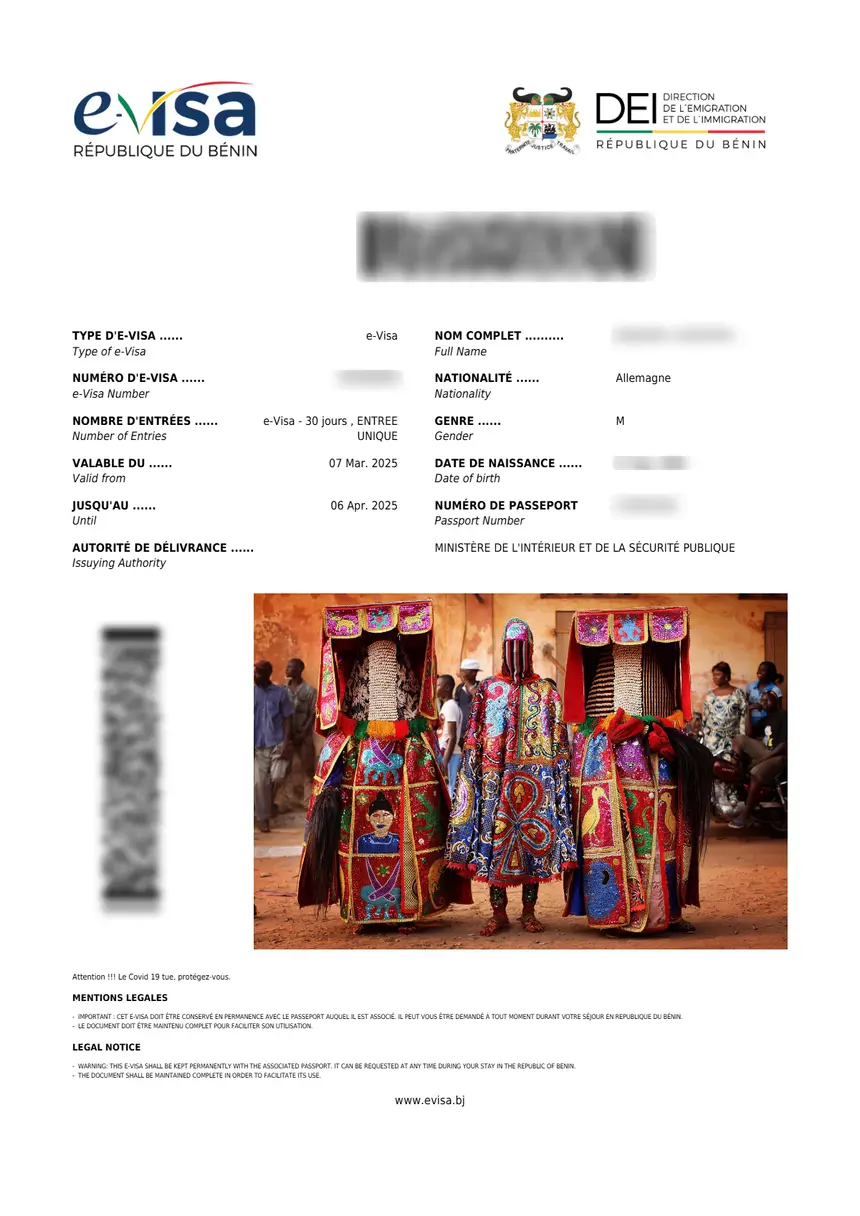
Who Needs a Visa for Benin?
Most foreign nationals require a visa to enter Benin. However, Benin maintains visa-free arrangements with several groups of countries, primarily within West Africa. Citizens of ECOWAS (Economic Community of West African States) member states can enter Benin without a visa for up to 90 days. This includes nationals of Nigeria, Ghana, Togo, Senegal, Mali, and other West African nations.
Nationals of most other countries – including the United States, United Kingdom, Canada, Australia, India, and all EU/EEA states – must obtain a visa before arrival. The most common route is the Benin e-Visa, which allows online application without visiting an embassy.
Some countries have bilateral agreements with Benin that grant visa-free or visa-on-arrival access beyond the ECOWAS framework. Diplomatic and service passport holders from select countries may also be exempt.
Visa-Free Entry Rules
Benin grants visa-free entry to citizens of ECOWAS member states and a small number of other African nations. Eligible travelers can stay for up to 90 days without a visa, provided they hold a valid passport and meet standard entry requirements.
Key rules for visa-free visitors:
- Maximum stay: 90 days per visit
- Valid passport required (minimum 6 months validity)
- Proof of onward travel may be requested at the border
- No work or business activities permitted without a separate authorization
- Overstaying the 90-day limit can result in fines, detention, or deportation
For the full list of exempt nationalities and conditions, see Benin Visa-Free Countries.
Benin e-Visa System
Since 2018, Benin has operated an electronic visa (e-Visa) system that replaced the traditional embassy-stamped visa for most applicants. The e-Visa is available to citizens of over 100 countries and can be obtained entirely online through the official government portal.
The e-Visa system offers two main categories:
- 30-day single-entry e-Visa – valid for one entry within 30 days of issuance
- 90-day multiple-entry e-Visa – allows multiple entries over a 90-day period
Processing typically takes 24-72 hours. Once approved, the e-Visa is delivered by email and must be printed or saved on a mobile device for presentation at the port of entry.
For a step-by-step walkthrough, visit Benin Visa Online Application.
Visa Categories and Types
Benin issues several visa categories based on the purpose of travel:
Tourist Visa – for leisure travel, sightseeing, and visiting friends or family. This is the most common visa type and is available as an e-Visa. See Benin Tourist Visa for details.
Business Visa – for attending meetings, conferences, trade fairs, or short-term professional activities. Business visa holders cannot take up local employment. See Benin Business Visa.
Transit Visa – for travelers passing through Benin en route to another destination. Required if you leave the international transit area of an airport. See Benin Transit Visa.
Diplomatic and Official Visa – for government officials and diplomats traveling on official business. These are processed through government channels and are not available via the e-Visa system.
Student Visa – for individuals enrolled in recognized educational institutions in Benin. Requires proof of enrollment and financial means.
Residence Visa – for long-term stays exceeding 90 days. Requires additional documentation and is processed through Benin’s immigration authorities.
For a full breakdown of each type, see Benin Visa Types.
Entry Requirements at the Border
Even with a valid visa, travelers must meet specific entry requirements at Benin’s ports of entry:
- Passport validity: At least 6 months from the date of entry
- Return or onward ticket: Immigration officers may ask for proof of onward travel
- Yellow fever vaccination: Required for all travelers arriving from or transiting through countries with risk of yellow fever transmission. See Benin Yellow Fever Vaccination.
- Proof of accommodation: Hotel booking or invitation letter
- Sufficient funds: Evidence that you can support yourself during your stay
Border officials have the final say on admission. A valid visa does not guarantee entry if you fail to meet these requirements.
For the complete checklist, read Benin Entry Requirements.
Visa Fees and Payment
Benin visa fees vary by visa type and duration:
| Visa Type | Fee (USD) | Validity |
|---|---|---|
| 30-day single-entry e-Visa | 50 | 30 days |
| 90-day multiple-entry e-Visa | 75 | 90 days |
| Transit visa | 25 | 7 days |
| Embassy visa (if applicable) | 75-150 | Varies |
Payment is made online via credit or debit card for e-Visa applications. Embassy applications may accept bank transfers or cash depending on the consulate. Fees are non-refundable, even if the application is denied.
For current pricing and payment details, see Benin Visa Fee.
Visa Processing Time
Standard e-Visa processing takes 24-72 hours. However, processing times can be longer during peak travel seasons or if additional documentation is requested. Factors that affect processing time:
- Completeness of the application
- Accuracy of uploaded documents
- Nationality of the applicant (some nationalities require additional screening)
- Current volume of applications
Embassy-processed visas typically take 5-10 business days. Expedited processing may be available at some embassies for an additional fee.
For timeline details, see Benin Visa Processing Time.
Overstay Rules and Penalties
Overstaying your visa in Benin is a serious offense. Penalties include:
- Daily fines: Accumulated for each day beyond the authorized stay
- Detention: In severe cases, travelers may be held by immigration authorities
- Deportation: The government may order removal from the country
- Future visa bans: Overstayers may be barred from re-entering Benin or other ECOWAS countries
If you need to extend your stay, apply for a Benin Visa Extension before your visa expires. Extensions are granted at the discretion of immigration authorities and are not guaranteed.
Visa Denial and Reapplication
Benin visa applications can be denied for several reasons:
- Incomplete or inaccurate application
- Invalid or damaged passport
- Failure to meet financial requirements
- Previous immigration violations
- Security concerns
If your application is denied, you will receive a notification with the reason. You can reapply after addressing the issue that caused the denial. There is no formal appeal process for e-Visa denials, but embassy applicants may be able to request reconsideration.
For guidance on handling a denial, see Benin Visa Denial.
Nationality-Specific Rules
Benin’s visa policy applies uniformly across most nationalities, but some countries have specific arrangements:
US Citizens – must obtain an e-Visa before travel. No visa-on-arrival option. See Benin Visa for US Citizens.
UK Citizens – require an e-Visa. Processing is straightforward with the online system. See Benin Visa for UK Citizens.
Indian Citizens – need an e-Visa. Additional documentation may be required. See Benin Visa for Indians.
ECOWAS Citizens – visa-free entry for up to 90 days with a valid passport.
Chinese Citizens – require a visa, applied for through the e-Visa system or nearest embassy.
Diplomatic and Special Agreements
Benin maintains bilateral visa exemption agreements with several countries for diplomatic and service passport holders. These agreements typically allow stays of 30-90 days without a visa. Common holders of diplomatic passports from countries like China, Turkey, and certain African nations may benefit from these arrangements.
Additionally, Benin participates in regional agreements through the African Union that may affect visa requirements for African nationals. The African Union’s free movement protocol, when fully implemented, could further liberalize entry rules across the continent.
Key Takeaways
Benin’s visa policy is straightforward for most travelers. The e-Visa system has made the process faster and more accessible than traditional embassy applications. Here are the essential points:
- ECOWAS citizens enter visa-free for up to 90 days
- Most other nationalities need an e-Visa (apply online)
- Two e-Visa options: 30-day single-entry or 90-day multiple-entry
- Yellow fever vaccination is mandatory for many travelers
- Passport must be valid for at least 6 months
- Overstaying carries fines, detention, and future bans
- Processing takes 24-72 hours for e-Visas
Do I need a visa to visit Benin?
It depends on your nationality. Citizens of ECOWAS member states (Nigeria, Ghana, Togo, Senegal, etc.) can enter visa-free for up to 90 days. Most other nationalities, including US, UK, Indian, and EU citizens, must obtain an e-Visa before traveling.
How long can I stay in Benin without a visa?
ECOWAS nationals can stay up to 90 days without a visa. All other travelers must have a valid visa. The standard e-Visa allows either 30-day single-entry or 90-day multiple-entry stays.
Can I get a visa on arrival in Benin?
No. Benin does not offer visa-on-arrival for most nationalities. You must apply for an e-Visa online before your trip. The process typically takes 24-72 hours.
What happens if I overstay my visa in Benin?
Overstaying results in daily fines, potential detention, deportation, and possible future visa bans. If you need more time, apply for a visa extension before your current visa expires.
Is the Benin e-Visa accepted at all border crossings?
Yes. The e-Visa is valid at all official ports of entry, including Cadjehoun International Airport in Cotonou, land borders with Togo, Nigeria, Burkina Faso, and Niger, and seaports.
Can I work in Benin on a tourist visa?
No. Tourist and e-Visa holders cannot engage in paid work or business activities. For employment, you need a separate work permit and residence visa processed through Benin’s labor and immigration authorities.
Do children need a visa for Benin?
Yes. Children of all ages require their own visa unless they hold ECOWAS nationality. Each child must have a separate passport and e-Visa application.
What documents do I need at Benin’s border?
You need a valid passport (6+ months validity), printed or digital e-Visa, yellow fever vaccination certificate, proof of accommodation, and evidence of sufficient funds. Return or onward ticket may also be requested.