

Yellow fever vaccination is mandatory for all travelers entering Benin. This requirement is enforced by the Beninese government under the International Health Regulations (IHR 2005) and applies to every visitor, regardless of nationality, visa type, or length of stay. Without a valid International Certificate of Vaccination or Prophylaxis (ICVP), commonly known as the “Yellow Card,” you will be denied entry at the border.
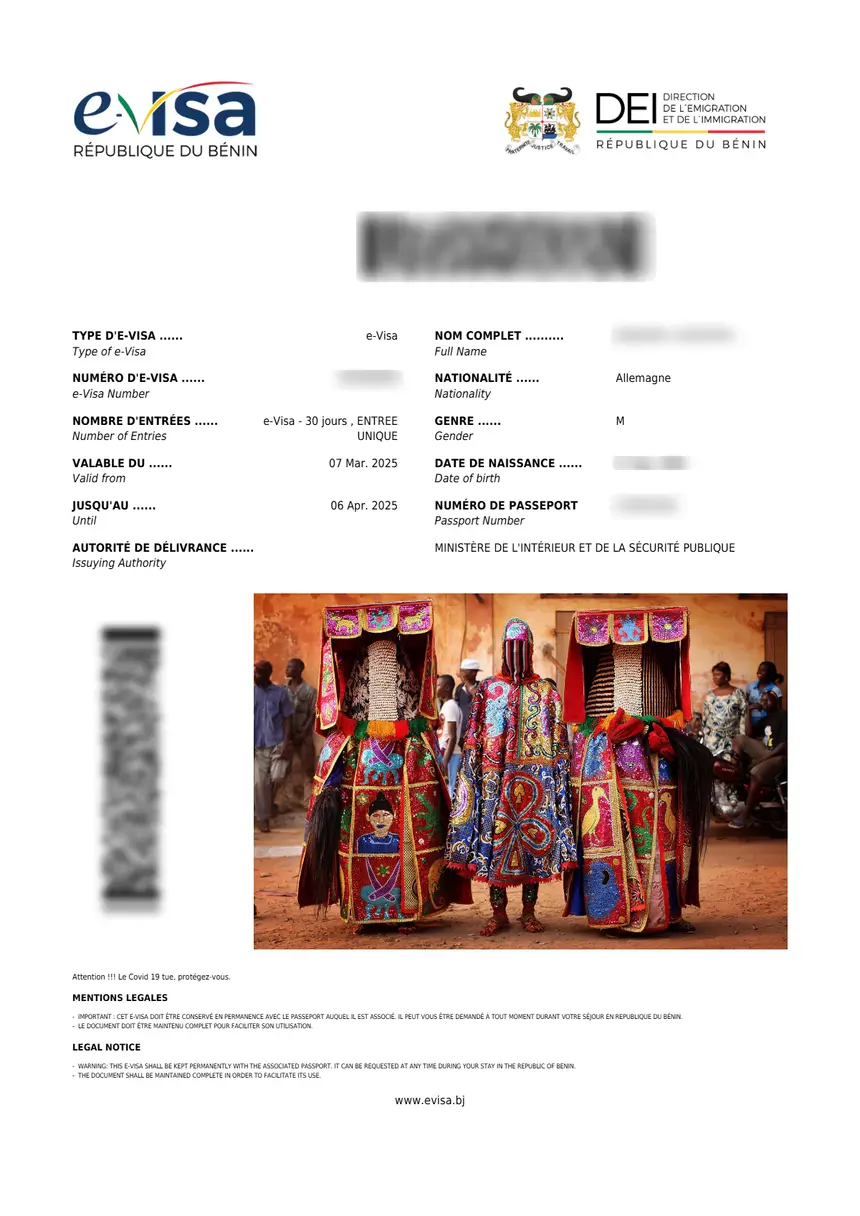
This guide covers everything you need to know about the yellow fever vaccination requirement for Benin: who must get vaccinated, how and where to get the vaccine, what the Yellow Card looks like, how much it costs, and what happens if you arrive without one.
Is Yellow Fever Vaccination Required for Benin?
Yes. Yellow fever vaccination is a legal entry requirement for Benin. This is not a recommendation or a suggestion — it is a strict mandate enforced at all ports of entry, including Cotonou Cadjehoun International Airport (COO), land borders with Nigeria, Togo, Burkina Faso, and Niger, and maritime entry points.
Benin is classified as a yellow fever endemic country by the World Health Organization (WHO). The Aedes aegypti mosquito, which transmits the yellow fever virus, is present throughout the country. The vaccination requirement exists to protect both travelers and the local population from outbreaks.
Who Must Get Vaccinated?
The requirement applies to:
- All international travelers aged 9 months and older entering Benin
- Transit passengers who leave the airport
- Travelers arriving from non-endemic countries (the requirement is universal, not just for arrivals from endemic zones)
- Business travelers, tourists, and humanitarian workers alike
Who Is Exempt?
Very few exemptions exist:
- Children under 9 months of age — the vaccine is not licensed for infants younger than 6 months, and WHO recommends vaccination from 9 months in endemic areas. However, parents should consult a travel medicine specialist for specific guidance.
- Travelers with documented medical contraindications — individuals with severe allergies to vaccine components, those with thymus disorders, or immunocompromised patients may qualify for a medical waiver. However, acceptance of waivers at Beninese immigration is not guaranteed.
Important: Even if you are transiting through Benin without leaving the airport, having a valid Yellow Card is strongly recommended, as policies can change and some airlines require it before boarding.
How to Get the Yellow Fever Vaccine
The yellow fever vaccine is a live attenuated vaccine (typically the 17D strain) administered as a single subcutaneous injection. Here is what you need to know about getting vaccinated.
Where to Get Vaccinated
Yellow fever vaccination is only available at authorized vaccination centers. You cannot get it at a regular doctor’s office or pharmacy in most countries.
- United States: Authorized yellow fever vaccination centers listed on the CDC website. These include travel medicine clinics, health departments, and some pharmacies.
- United Kingdom: Registered yellow fever vaccination centers, searchable through the National Travel Health Network and Centre (NaTHNaC).
- European Union: Each country has designated centers — check with your national health authority or travel medicine association.
- Africa: Many countries have yellow fever vaccination centers at airports, ports, and public health facilities. Contact your local health ministry.
Cost of the Yellow Fever Vaccine
The cost varies significantly by country and provider:
| Country | Approximate Cost |
|---|---|
| United States | $150 – $350 (including consultation) |
| United Kingdom | £60 – £90 |
| Canada | CAD $150 – $250 |
| Australia | AUD $80 – $150 |
| Nigeria | NGN 5,000 – 15,000 |
| Ghana | GHS 150 – 300 |
Note: The vaccine cost often includes the consultation fee, the vaccine itself, and the issuance of the official Yellow Card. Some insurance plans cover travel vaccinations — check with your provider before your appointment.
Timing: When to Get Vaccinated
You must be vaccinated at least 10 days before your arrival in Benin. This waiting period allows your body to develop sufficient antibodies against the virus. The 10-day rule is strictly enforced — if you were vaccinated fewer than 10 days before arrival, your certificate may not be accepted.
Planning tip: Schedule your vaccination appointment at least 2 to 3 weeks before departure to allow time for the vaccine to take effect and to account for any clinic scheduling delays.
Does the Vaccine Provide Lifelong Protection?
Yes. Since 2013, the WHO has determined that a single dose of yellow fever vaccine provides lifelong protection. The previous recommendation for a booster dose every 10 years has been officially removed. Your Yellow Card no longer has an expiration date for the vaccination itself.
However, some countries (not Benin) may still require proof of vaccination within the last 10 years for entry. Always check the specific requirements of your destination country.
The Yellow Card (ICV) Explained
The International Certificate of Vaccination or Prophylaxis (ICVP), commonly known as the Yellow Card or Yellow Fever Certificate, is the official WHO document that proves you have been vaccinated against yellow fever.
What the Yellow Card Looks Like
The Yellow Card is a small yellow booklet (approximately 13 x 10 cm) that contains:
- Your personal details: Full name, date of birth, passport number, nationality
- Vaccination details: Date of vaccination, vaccine manufacturer, batch number, dose administered
- Official stamps: The stamp and signature of the authorized vaccination center, plus the official yellow fever stamp recognized by WHO
- Valid from date: The date on which protection is considered effective (10 days after vaccination)
Where to Get the Official Yellow Card
The Yellow Card is issued at the time of vaccination by the authorized vaccination center. You do not need to apply for it separately. The clinic will fill out your details, apply their official stamp, and hand you the document.
Critical warning: Do not purchase or use a fake Yellow Card. Using a fraudulent health certificate is a criminal offense in most countries and can result in immediate deportation, fines, or imprisonment. Immigration authorities in Benin and other countries are trained to identify counterfeit certificates.
Digital vs. Paper Yellow Cards
While some countries and airlines are moving toward digital vaccination records, the paper Yellow Card remains the universally accepted format. As of 2026, there is no single global digital standard for yellow fever certificates.
- Benin accepts the traditional paper Yellow Card at all entry points
- Some digital health passes (such as the EU Digital COVID Certificate framework) are being explored for yellow fever, but are not yet standard
- Always carry the original paper document — photocopies or photos on your phone are not guaranteed to be accepted
Countries That Require Yellow Fever Proof
Benin is one of many countries that require proof of yellow fever vaccination. The requirement exists in two categories:
Countries Requiring Vaccination from ALL Travelers
These countries require yellow fever vaccination regardless of where you are traveling from:
- Benin
- Ghana
- Nigeria
- Togo
- Burkina Faso
- Central African Republic
- Democratic Republic of Congo
- Republic of Congo
- Gabon
- French Guiana
Countries Requiring Vaccination from Endemic Zone Travelers
These countries require proof of yellow fever vaccination only if you are arriving from (or have transited through) a yellow fever endemic country:
- South Africa
- India
- Thailand
- Australia
- United States (for arrivals from endemic countries)
- China
- European Union member states
This means: If you visit Benin and then travel to South Africa, India, or another country with transit restrictions, you will need to show your Yellow Card upon arrival in that country as well. The same certificate works for all destinations.
What Happens Without a Yellow Card
Arriving in Benin without a valid yellow fever vaccination certificate has serious consequences:
Entry Denial
Immigration officers at Cotonou airport and all border crossings check every arriving passenger for a Yellow Card. If you cannot produce one, you will be:
- Refused entry and placed on the next available return flight at your own expense
- Detained in a quarantine area until departure arrangements are made
- Deported with a record that may affect future visa applications to Benin and other countries
No On-the-Spot Vaccination
Unlike some countries that offer vaccination upon arrival (sometimes with a fee), Benin does not provide yellow fever vaccination at the airport or border. You must arrive with a valid certificate — there is no option to get vaccinated on the spot.
Airline Responsibility
Many airlines will check for a valid Yellow Card at check-in before you board your flight to Benin. If you cannot present one, the airline may deny you boarding, as they are liable for transporting you back if you are refused entry.
Yellow Fever Vaccine Side Effects and Safety
The yellow fever vaccine is considered very safe, with most people experiencing no or only mild side effects.
Common Side Effects (1 in 4 people)
- Soreness, redness, or swelling at the injection site
- Low-grade fever
- Headache
- Muscle aches
- Fatigue
These typically resolve within a few days and require no treatment beyond rest and over-the-counter pain relievers.
Rare Serious Side Effects
In extremely rare cases, the yellow fever vaccine can cause serious adverse reactions:
- Yellow fever vaccine-associated viscerotropic disease (YEL-AVD): A severe illness resembling yellow fever itself. Occurs in approximately 0.3 per 100,000 doses. Risk increases with age.
- Yellow fever vaccine-associated neurotropic disease (YEL-AND): Encephalitis or other neurological reactions. Occurs in approximately 0.8 per 100,000 doses. More common in infants under 6 months.
While these reactions are very rare, they underscore the importance of getting vaccinated at an authorized center where medical staff can monitor for adverse events.
Who Should NOT Get the Vaccine
The yellow fever vaccine is contraindicated for:
- Infants under 6 months old (absolute contraindication)
- People with severe allergies to egg protein or other vaccine components
- Individuals with thymus disorders (such as thymoma or prior thymectomy)
- Immunocompromised individuals including those with HIV/AIDS with low CD4 counts, active cancer treatment, or organ transplant recipients on immunosuppressive drugs
- Pregnant women — vaccination during pregnancy is generally avoided unless travel to an endemic area is unavoidable
If you fall into one of these categories, consult a travel medicine specialist. A medical waiver letter may be issued, but as noted above, its acceptance at Beninese immigration is not guaranteed.
Frequently Asked Questions
Is yellow fever vaccination mandatory for Benin?
Yes. Yellow fever vaccination is a legal requirement for entry into Benin. All travelers aged 9 months and older must present a valid International Certificate of Vaccination (Yellow Card) at immigration. Without it, you will be denied entry.
How long before traveling to Benin should I get vaccinated?
You must receive the yellow fever vaccine at least 10 days before arriving in Benin. The vaccine needs this time to produce adequate immunity. Plan to get vaccinated 2 to 3 weeks before departure to allow for clinic scheduling and the 10-day waiting period.
How much does the yellow fever vaccine cost?
The cost ranges from approximately $150 to $350 in the United States, £60 to £90 in the UK, and varies in other countries. The fee typically includes the consultation, the vaccine, and the official Yellow Card. Some travel insurance plans may cover the cost.
Is the yellow fever vaccine valid for life?
Yes. Since 2013, the WHO has confirmed that a single dose of yellow fever vaccine provides lifelong protection. Booster doses are no longer required or recommended. Your Yellow Card remains valid indefinitely.
Do children need the yellow fever vaccine for Benin?
Yes. Children aged 9 months and older must have a valid yellow fever vaccination certificate to enter Benin. Children under 9 months are generally exempt, but parents should consult a pediatric travel medicine specialist for advice.
Can I enter Benin without a Yellow Card?
No. Benin strictly enforces the yellow fever vaccination requirement at all ports of entry. There is no option for on-the-spot vaccination, quarantine alternative, or fine in lieu of the certificate. You will be denied entry and returned to your point of departure at your own expense.
Where can I get a replacement Yellow Card?
If you have lost your Yellow Card but were previously vaccinated, contact the original vaccination center where you received the vaccine. They may be able to reissue the certificate from their records. If the center cannot help, contact your national health authority. As a last resort, you may need to be revaccinated — consult a travel medicine doctor before doing so.
Does Benin accept digital yellow fever certificates?
Benin primarily accepts the traditional paper Yellow Card at immigration. While some digital health credentials are being developed, you should always carry the original paper certificate when traveling to Benin. Do not rely solely on a digital or photographed copy.
Summary
Yellow fever vaccination is not optional for Benin — it is a mandatory entry requirement enforced at every border crossing and airport. To prepare for your trip:
- Get vaccinated at an authorized center at least 10 days before departure
- Obtain your official Yellow Card at the time of vaccination
- Carry the original document — not a photocopy or digital version
- Keep your Yellow Card safe — it is valid for life and you will need it for future travel to other yellow fever endemic or requiring countries
- Check your passport — the name on your Yellow Card must match your passport exactly
Whether you are visiting Benin for tourism, business, or transit, the yellow fever vaccination is the single most important health preparation for your trip. Get it done early, keep your Yellow Card with your travel documents, and you will clear immigration without any issues.
This guide is for informational purposes. Always verify the latest requirements with your national health authority and the official Benin e-Visa portal at evisa.bj before traveling.